If you are looking at your garage, basement, workshop and commercial floor and thinking, “Maybe I should just do this myself,” you are not alone. A lot of people see a DIY epoxy kit, compare it to a professional quote, and feel like the choice should be obvious. The kit looks cheaper. The instructions look simple. And at first glance, paying a contractor can feel like spending way more than you need to.
But this is where many people get stuck. The real question is not just, “Which one costs less today?” The real question is, which one saves more money once the floor is finished, used, cleaned, parked on and lived with for years? That is a very different question, and the answer is not always what people expect.
In simple terms, DIY epoxy flooring is usually cheaper upfront but professional installation often saves more money long term because it tends to last longer, includes proper prep and reduces the risk of peeling, bubbling, hot-tire pickup and early failure. Professional installation costs for epoxy flooring are commonly cited in a broad range of about $2 to $12 per square foot while many DIY projects look cheaper at the start because they mainly involve kit and tool costs rather than labor.
So if you want the honest answer before we go any further, here it is: DIY usually wins on upfront budget but professional installation often wins on overall value. The best choice depends on your floor condition, your skill level, how long you want the coating to last and how much risk you are willing to take.
Why this question matters so much
This topic matters because epoxy flooring is one of those projects that looks easy from the outside. You clean the floor, roll on the coating, let it cure and you are done. That is how it is often marketed. But in real life, the performance of an epoxy floor depends heavily on preparation, moisture control, correct mixing, timing, temperature and application thickness. When those things go wrong, the floor may still look fine for a short time but problems can show up faster than expected.
That is why people who care about money should care about installation quality. A cheap floor that fails in one to three years is not really cheap. It just spreads the cost into a second repair or replacement later. Some installer sources specifically warn that thinner DIY-style jobs often have a much shorter lifespan than better prepared professional systems.
How much does DIY epoxy flooring cost in the USA?
DIY epoxy flooring usually looks attractive because the entry price is low. Some installer breakdowns put basic DIY kit pricing at around $100 to $600, depending on quality and coverage while other comparisons estimate DIY epoxy at roughly $3 to $12 per square foot once materials and project scope are considered. One garage-focused cost example lists a one-car garage at about $480 to $1,200, a two-car garage at around $720 to $1,800 and a three-car garage at roughly $1,120 to $2,800 for DIY work.
That sounds like a big savings compared with a professional quote and sometimes it is. But that headline number usually does not include the full picture. Most DIY projects also need cleaners, degreasers, rollers, brushes, safety gear, patching materials and sometimes etching solution and other prep supplies. If you make a mistake, you may also need extra materials or even a full redo.
And there is another hidden cost people often ignore: your time. DIY epoxy is not just a “paint it and walk away” job. Prep takes real effort. Drying and cure windows matter. Mixing mistakes matter. Weather and humidity can matter. If you are doing this on a weekend because you want to save money, you need to count the time and stress too, especially if the slab has stains, cracks, old coatings and moisture issues.
How much does professional epoxy flooring installation cost in the USA?
Professional epoxy flooring costs more because you are paying for labor, equipment, materials and experience. A commonly cited installed price range is about $2 to $12 per square foot, although garage and decorative systems often land higher than the lowest advertised number because proper prep and better finishes add cost. One comparison also summarizes professional pricing around $4 to $7 per square foot in certain garage contexts while another garage-floor source frames many typical pro garage jobs in the low thousands.
That higher price usually includes more than just applying epoxy. A professional crew is normally handling concrete prep, patching, profiling the slab, mixing correctly, applying the coating evenly, and building a system that is meant to last. On better jobs, the contractor is not simply rolling on a thin product. They are building a floor.
This is where many homeowners and business owners change how they look at the quote. Once you understand that prep is one of the biggest reasons epoxy succeeds or fails, the labor cost starts to make more sense. The floor is only as good as what happens before the shiny finish goes down.

What does DIY save you upfront?
Let’s be fair to DIY for a minute, because it does have real advantages. If your slab is in decent shape, the area is small and your goal is a lower-cost cosmetic improvement rather than a heavy-duty long-term system, DIY can absolutely save money at the start. You avoid labor costs, you choose your own pace and you may get a result that is “good enough” for a lower-use space.
For someone working on a simple garage refresh, a small utility room and a space where appearance matters more than long-term durability, that lower upfront spend can be appealing. This is why DIY kits continue to sell so well. The barrier to entry is low, and for the right project, the value can be reasonable.
But “saving money upfront” is not the same as “saving the most money overall.” That is the part where this decision usually gets real.
Where DIY can start getting expensive
The biggest risk with DIY epoxy flooring is not that it costs money. It can cost money twice. You pay for the kit, tools, prep materials and your time. Then if the floor fails early, you may need to remove it, repair the slab and pay for a professional installation anyway. Installer sources repeatedly point to common DIY failure issues like peeling, bubbling and poor durability especially when prep or application is weak.
This is also where the emotional side of the decision matters. A lot of people start DIY to avoid a painful quote then end up frustrated because the finish is uneven, the coating lifts under hot tires, or the result just does not look like the photo on the box. At that point, the original professional quote suddenly does not feel so expensive anymore.
And if this is a business floor, the stakes are even higher. A failed floor in a commercial setting can affect safety, appearance, cleaning and daily operations. That is not just a coating problem. That becomes a business problem.
Why professional installation often saves more money long term
The strongest argument for professional installation is durability. Multiple sources describe professionally installed epoxy floors as lasting around 10 to 20 years when installed and maintained properly, largely because of correct prep, better materials and more controlled application. That longer lifespan is the main reason pros usually win the long-term cost conversation.
Think about it in simple terms. If a DIY floor lasts a short time and a pro-installed floor lasts many years, the professional job may cost more at the start but less per year of use. That is the difference between price and value. A lot of buyers focus on price first because it is visible. Value only becomes obvious later.
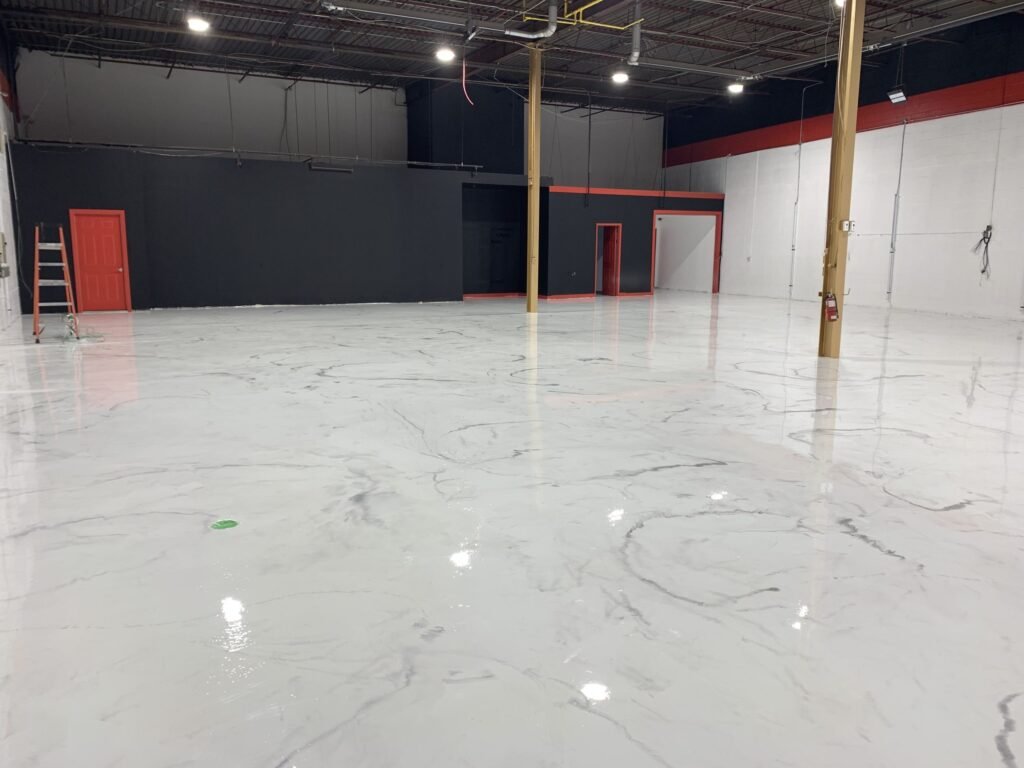
Professional work also tends to look better, especially on larger areas or decorative finishes. Even coating thickness, cleaner edges, better surface prep and stronger topcoat performance all matter. For homeowners who care about appearance and for businesses that want a floor that reflects well on the brand, that finish quality is part of the savings too because it reduces the chance of rework.
So which one actually saves more money?
Here is the honest answer.
If your only goal is to spend the least amount of money today, DIY epoxy usually wins. The entry cost is lower and you avoid labor. That part is true.
But if your goal is to spend the least amount of money over time, professional installation often wins because it is more likely to last, less likely to fail early and less likely to need replacement after a short period. That matters even more on garage floors, busy residential spaces and almost any commercial floor.
So the better question is not “Which is cheaper?” It is “How long do I need this floor to perform and how expensive will failure be if it goes wrong?” Once you ask that question, the answer gets much clearer.
When DIY makes sense
DIY epoxy flooring can make sense when the project is small, the slab is in decent condition, your expectations are realistic and you are okay with some risk. It can also work if you mainly want a cosmetic improvement and do not need the floor to handle tough traffic, heavy use and years of wear. Some small garages and low-demand areas are the kinds of spaces where homeowners are most likely to try DIY first.
It can also make sense for people who truly enjoy hands-on projects and understand that the result may not match a full professional system. That honest expectation matters. DIY becomes a problem when people expect pro-level durability from a shortcut budget.
When professional installation makes more sense
Professional installation makes more sense when the floor matters. That includes garages you use every day, floors that need to look great, concrete with visible issues and spaces where failure would be annoying, expensive, or unsafe. It makes even more sense for commercial properties, showrooms, kitchens, workshops and any place where downtime and poor finish quality creates extra problems.
It also makes sense when you want long-term value instead of short-term savings. If you would rather pay once and get a system that has a better chance of lasting for many years, pro installation is usually the smarter financial move.
What should homeowners and business owners do next?
If you are still deciding, the smartest move is to compare more than price. Ask yourself what condition the floor is in, how long you want the coating to last, how much traffic it will handle and how costly it would be if the floor failed. Then compare that to the real savings of going DIY.
If you are getting professional quotes, do not just ask for the cheapest number per square foot. Ask what prep is included, what type of system is being installed, what kind of warranty or expected lifespan you can expect, and whether the quote includes repair work if the slab needs it. Those answers are where the real value lives.
And if you are leaning DIY, be realistic. Budget for more than just the kit. Budget for prep supplies, tools, safety gear and the possibility that the result may not last as long as you hoped. That is the only fair way to compare the two options.
Final verdict
So Which one saves more money in the USA: DIY epoxy flooring or professional installation?
DIY usually saves more money upfront. Professional installation usually saves more money over the life of the floor. That is the clearest, most honest answer. The cheaper choice at the beginning is not always the cheaper choice in the end.
If you want a short-term budget solution for a small, lower-risk area, DIY may be enough. But if you want durability, better appearance, less stress and stronger long-term value, professional epoxy installation is often the smarter investment.
FAQs
Is DIY Epoxy flooring really Cheaper than Professional installation?
DIY Epoxy flooring is cheaper upfront because you only pay for materials. However, professional installation often saves more money in the long run because it lasts longer and reduces the risk of Costly Repairs
How much does DIY Epoxy flooring cost per square foot in the USA?
DIY Epoxy flooring usually costs around $3 to $12 per square foot depending on the quality of materials, tools required and Floor condition
How much does professional epoxy flooring installation cost in the USA?
Professional Epoxy flooring installation typically costs between $2 and $12 per square foot with most high-quality jobs falling in the mid to upper range due to proper preparation and Durability
How Long does DIY Epoxy flooring last compared to Professional installation?
DIY Epoxy flooring may last a few years if Done correctly while professionally installed epoxy flooring can last 10 to 20 years with Proper Maintenance
When should I choose professional epoxy flooring instead of DIY?
You Should choose professional installation for Garage floors, commercial spaces and high-traffic areas, where durability, appearance and Long-term performance matter Most